Most homeowners don’t think much about their refrigerator’s water filter until their ice cubes start tasting funky or the dispenser slows to a trickle. That little cartridge inside your Kenmore fridge does more heavy lifting than you’d expect, removing chlorine, lead, mercury, pesticides, and other contaminants from every glass of water and handful of ice your family consumes. Ignoring it isn’t just bad for flavor: it can affect your fridge’s performance and your household’s health. Whether you’re dealing with a side-by-side, French door, or bottom-freezer Kenmore model, understanding how to choose, replace, and maintain your water filter will keep your appliance running efficiently and your drinking water crisp and clean.
Table of Contents
ToggleKey Takeaways
- Kenmore refrigerator water filters remove chlorine, lead, mercury, and pesticides, protecting your family’s health and appliance performance—replace every 6 months or when you notice slow flow, odd taste, or discolored water.
- Identify your Kenmore filter by checking the cartridge label for part numbers like 9081, 9084, 46-9990, or LT700P, or cross-reference your model number on Kenmore’s parts website if the label is missing.
- Replacing a Kenmore water filter takes less than five minutes with no tools required—twist counterclockwise, pull out the old filter, insert the new one, twist clockwise, then flush 2–3 gallons of water to remove carbon dust.
- Aftermarket filters certified with NSF/ANSI 42 and 53 standards can save 50–75% compared to OEM Kenmore filters while maintaining performance, but always verify certifications and check reviews to avoid low-quality alternatives.
- Heavy water users (larger families, frequent ice maker use) may need to replace filters every 4 months instead of 6, and keeping a spare filter on hand prevents unexpected outages when the indicator light turns red.
- Common filter problems like slow flow, bad taste, or leaks typically resolve with proper installation, air purging, or O-ring inspection—persistent issues may indicate a damaged housing or failing inlet valve requiring professional service.
Why Your Kenmore Refrigerator Water Filter Matters
Your refrigerator’s water filter isn’t just a convenience feature, it’s the last line of defense between municipal or well water and your family’s drinking supply. Even treated tap water carries residual chlorine, sediment, and trace contaminants that affect taste and odor. Over time, the activated carbon media inside your Kenmore filter traps these impurities, but that capacity isn’t unlimited.
When a filter reaches the end of its service life (typically around 200 gallons or six months, whichever comes first), it stops performing effectively. Contaminants can slip through, and in worst-case scenarios, a clogged filter restricts water flow, forcing the dispenser and ice maker to work harder. That extra strain can shorten the lifespan of your fridge’s water inlet valve and solenoid.
Most Kenmore filters meet NSF/ANSI Standard 42 (aesthetic effects like chlorine taste and odor) and Standard 53 (health effects including lead, mercury, and cyst reduction). If you’re on well water or live in an area with known contamination issues, check your specific filter’s certification to ensure it addresses the contaminants in your supply. The filter housing label or user manual will list what it’s rated to remove.
Ignoring filter changes can also lead to biofilm buildup, a slimy layer of bacteria that forms inside the housing and lines. Once established, it’s tough to eliminate without a thorough cleaning or replacement of internal components, a job that’s far more involved than swapping a cartridge.
How to Identify the Right Filter for Your Kenmore Refrigerator Model
Kenmore refrigerators use several different filter models, and installing the wrong one won’t just fail to fit, it can cause leaks or damage the housing. The easiest way to identify your filter is to open your fridge and locate the existing cartridge. Most Kenmore models position the filter in one of three spots: inside the upper-right corner of the fresh food compartment, in the base grille at the bottom front, or in the back upper-left corner.
Pull the filter out (you may need to twist or push a release tab) and check the label on the cartridge body. Common Kenmore filter part numbers include 9081, 9084, 9990, 46-9081, 46-9990, and LT700P. Write down the full part number, including any prefix.
If the filter’s already been tossed or the label’s worn off, check your refrigerator’s user manual or the model/serial tag inside the fridge (usually on the left or right wall, near the top). The tag will list the model number, something like 795.7109#.###. You can cross-reference this on Kenmore’s parts website or call their support line with the model number to confirm the correct filter.
Some Kenmore refrigerators sold after 2017 are rebranded LG or Samsung units due to changes in brand ownership. If your model number starts with 795, it’s likely an LG-manufactured unit, and your filter may cross-reference with LG part numbers like LT700P or ADQ36006101. Samsung-manufactured Kenmore models often use DA29-00020B or similar Samsung filters. Knowing the OEM manufacturer can expand your filter options and sometimes save money.
Step-by-Step: Replacing Your Kenmore Water Filter
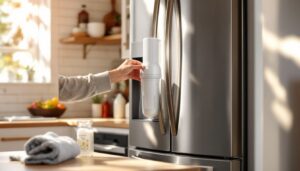
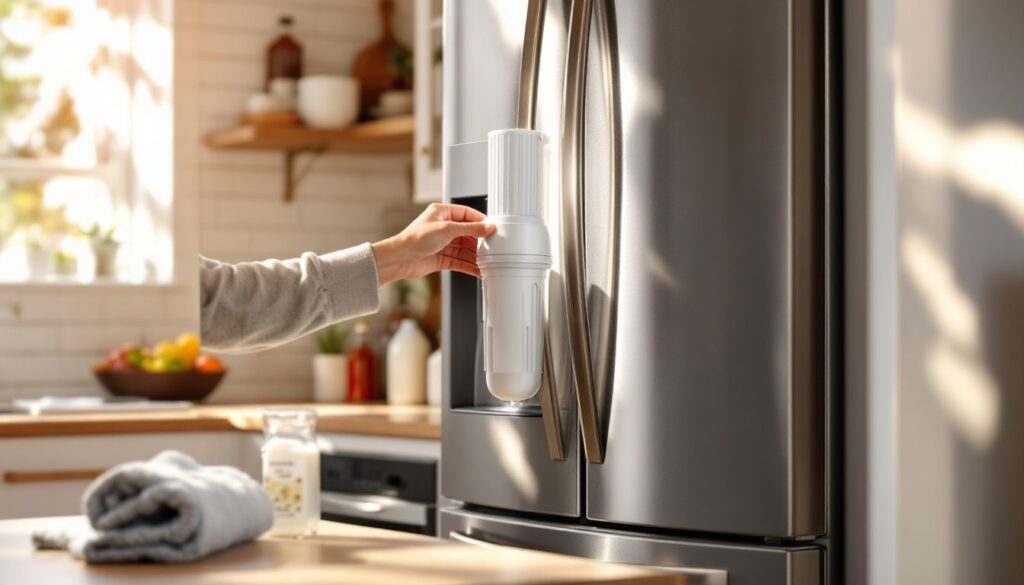
Swapping a Kenmore refrigerator water filter is one of the simplest maintenance tasks you can do, no tools required, and it takes less than five minutes. Before you start, locate your new filter and remove any protective caps or seals. Most cartridges ship with a plastic cover over the inlet and outlet ports to keep them clean.
For upper-corner interior filters:
- Open the refrigerator door and locate the filter housing in the upper-right corner (some models place it on the left).
- Twist the old filter counterclockwise about a quarter turn, then pull it straight out. Expect a small dribble of water, keep a towel handy.
- Remove the cap from the new filter and align the cartridge with the housing. Push it in firmly, then twist clockwise until it locks. You should feel a slight click or resistance when it seats.
- Press and hold the “Reset” or “Filter” button on the dispenser control panel for 3 seconds to reset the filter indicator light.
For base-grille filters:
- Locate the round filter cover at the bottom front of the fridge, near the floor.
- Turn the cover counterclockwise and pull it off. The filter cartridge will be visible inside the cavity.
- Pull the old filter straight out. Insert the new filter, cap removed, and push until it stops.
- Replace the cover, turning clockwise to lock it in place. Reset the filter indicator if your model has one.
For rear upper-corner filters (less common):
- Open the door and locate the housing in the back upper-left corner.
- Push the eject button or tab, then pull the cartridge straight out.
- Slide the new filter in until it clicks. Reset the indicator light.
After installation, run 2–3 gallons of water through the dispenser to flush carbon fines and air from the system. The first few glasses may look cloudy or release black specks, that’s normal. It’s just residual carbon dust, which is harmless but unsightly. If your dispenser has a cleaning mode or dedicated flush setting, use it. Otherwise, just fill and dump several pitchers until the water runs clear.
Safety note: If you’re replacing a filter on a fridge with a known leak history or visible corrosion around the housing, inspect the O-rings and seals. If they’re cracked or hard, you may need to replace the housing assembly, a job that’s more involved but still DIY-friendly with basic hand tools.
How Often Should You Replace Your Kenmore Filter?
Kenmore recommends replacing refrigerator water filters every six months under normal use, but that’s a baseline, not a universal rule. If your household uses more water than average, say you fill multiple water bottles daily, run the ice maker constantly, or have a larger family, you may hit the filter’s capacity sooner. Most cartridges are rated for 200 to 300 gallons, and heavy users can reach that limit in four months or less.
Your fridge’s filter indicator light is a helpful reminder, but it’s typically time-based, not flow-based. It’ll turn red or flash after six months regardless of actual usage. If you drink mostly bottled water and rarely use the dispenser, you might stretch a filter to eight or nine months, but don’t push it much further. Stagnant water inside an old filter can harbor bacteria, and the carbon media degrades over time even without heavy flow.
Watch for these signs that a filter needs changing ahead of schedule:
- Slow water flow from the dispenser or ice maker
- Off taste or odor in water or ice cubes
- Cloudy or discolored water (though this can also indicate a sediment issue upstream)
- Indicator light turns red or flashes
If you’re on well water, live in an area with high sediment, or have hard water, you may need to change filters more frequently. Sediment clogs the pores in the carbon block faster than it would in treated municipal water. Some homeowners in these situations add an inline pre-filter or whole-house sediment filter to extend the life of the refrigerator cartridge.
Keep a spare filter on hand so you’re not caught off-guard when the light turns red on a Sunday evening. Many appliance maintenance guides recommend buying filters in multi-packs during sales to cut per-unit cost and ensure you’re never without a replacement.
OEM vs. Aftermarket Filters: What Homeowners Need to Know
When it’s time to buy a replacement filter, you’ll face a choice: stick with the OEM (original equipment manufacturer) cartridge sold under the Kenmore or LG brand, or go with a cheaper aftermarket alternative. Both have trade-offs, and the right call depends on your priorities.
OEM filters are made or certified by the original manufacturer and guaranteed to meet the specs for your fridge model. They’re tested for fit, flow rate, and contaminant reduction, and they typically carry NSF/ANSI certifications. The downside? They’re pricier, often $40 to $60 per cartridge. If you’re buying them every six months, that adds up.
Aftermarket filters are third-party products designed to fit Kenmore models. Many are NSF-certified and perform just as well as OEM cartridges, at half the price or less (often $15 to $30). The catch is quality varies widely. Some aftermarket brands cut corners on materials or don’t achieve the same contaminant reduction. A few may not fit as snugly, leading to slow leaks or airlocks.
If you go aftermarket, stick with brands that list NSF/ANSI 42 and 53 certifications on the packaging, not just “tested to NSF standards.” Certification means an independent lab verified the claims. Check reviews on retailer sites and trusted appliance review sources for real-world feedback on fit and performance.
Some common reputable aftermarket filter brands include Waterdrop, Pureza, and Tier1. Avoid no-name bargain filters that show up in multi-packs for $10 on discount sites, they’re often made with lower-grade carbon and may not seal properly.
One other consideration: warranty. If your Kenmore refrigerator is still under manufacturer’s warranty, using an aftermarket filter could complicate a warranty claim if a water system component fails. Kenmore and LG have been known to deny coverage if they determine a non-OEM filter contributed to the problem. Once you’re out of warranty, that concern disappears.
If you want the peace of mind of OEM performance without the OEM price tag, consider subscribing to a filter delivery service or buying in bulk when retailers run promotions. Some stores offer 20–30% off when you buy three or more filters at once.
Troubleshooting Common Kenmore Water Filter Issues
Even a fresh filter can cause headaches if something goes wrong during installation or if there’s an underlying issue with your fridge’s water system. Here’s how to troubleshoot the most common problems.
Slow or no water flow after replacing the filter:
This usually means air is trapped in the line or the filter isn’t seated correctly. Remove the filter, check that you’ve removed all protective caps, and reinstall it, making sure it locks into place with a firm twist or click. Then run 2–3 gallons through the dispenser to purge air. If flow is still weak, the water inlet valve or supply line may be partially clogged, check the braided or copper line behind the fridge for kinks or sediment buildup.
Water tastes bad or smells like plastic:
New filters often have a slight plastic or carbon taste for the first few uses. Flush at least 2 gallons through the system. If the taste persists, you may have a low-quality aftermarket filter or a biofilm issue in the lines. Try switching to a certified OEM or name-brand aftermarket cartridge. If that doesn’t help, disconnect the water line and flush it separately, or call a technician to inspect the internal tubing.
Filter won’t lock into place:
Double-check that you’re using the correct part number for your model. Even filters that look similar may have slightly different locking tabs or O-ring positions. If the filter is correct but still won’t lock, inspect the housing for cracks, broken tabs, or debris. A damaged housing will need to be replaced, part numbers are available through Kenmore or appliance parts retailers.
Indicator light won’t reset:
Most Kenmore models require you to press and hold the filter reset button for 3 to 5 seconds. If the light stays red, try unplugging the fridge for 30 seconds to reset the control board, then plug it back in and attempt the reset again. If that fails, consult your user manual, some older models require a specific button combination.
Leaking from the filter housing:
A slow drip usually means the O-ring on the filter cartridge is damaged, missing, or not seated properly. Remove the filter, inspect the black rubber O-ring, and reinstall carefully. If the leak continues, the housing itself may be cracked. Replacing the housing is a moderate DIY task, but if you’re not comfortable working with water lines and internal fridge components, it’s worth calling a tech.
For persistent issues that don’t resolve with these steps, consult detailed appliance troubleshooting resources or contact Kenmore support. Water system problems can sometimes point to a failing inlet valve, control board, or even a mainline pressure issue, all of which go beyond simple filter maintenance.
Conclusion
Keeping your Kenmore refrigerator’s water filter fresh is one of the easiest ways to protect your appliance and your family’s health. With the right filter, a simple twice-a-year swap, and a little troubleshooting know-how, you’ll enjoy clean, great-tasting water and ice for years to come. Stock a spare, mark your calendar, and don’t ignore that indicator light, your fridge will thank you.