Dishwasher tabs have replaced traditional powders and liquids in most kitchens, and for good reason. They’re pre-measured, convenient, and engineered to tackle grease, hard water stains, and baked-on food without guesswork. But not all tabs deliver the same results, and choosing the wrong one for your water type or machine can leave you with cloudy glasses and gritty residue. This guide cuts through the marketing hype and explains what dishwasher tabs actually do, how to pick the right formula for your home, and how to avoid the most common usage mistakes that waste money and leave dishes less than spotless.
Table of Contents
ToggleKey Takeaways
- Dishwasher tabs are engineered with enzymes, surfactants, and time-release layers that dissolve during the wash cycle to remove grease, stains, and food residue—but performance depends on water temperature, hardness, and proper machine settings.
- Hard water (7+ gpg) requires tabs with built-in water softeners and additional rinse aid or salt to prevent cloudy residue, while soft water demands minimum detergent doses to avoid oversudsing and streaking.
- Place dishwasher tabs in the main detergent dispenser—not loose in the bottom—and keep them in a cool, dry container to preserve the PVA film’s water-soluble properties and time-release effectiveness.
- Skipping pre-rinsing, using the correct wash cycle for soil level, and running monthly machine cleanings maximize how well dishwasher tabs perform and prevent mineral or detergent buildup.
- Budget-conscious households can save by choosing powder detergent (10 cents per load) or store brands with the same active ingredients as premium tabs, while eco-friendly options use plant-based enzymes and phosphate-free formulas certified by third-party standards.
What Are Dishwasher Tabs and How Do They Work?
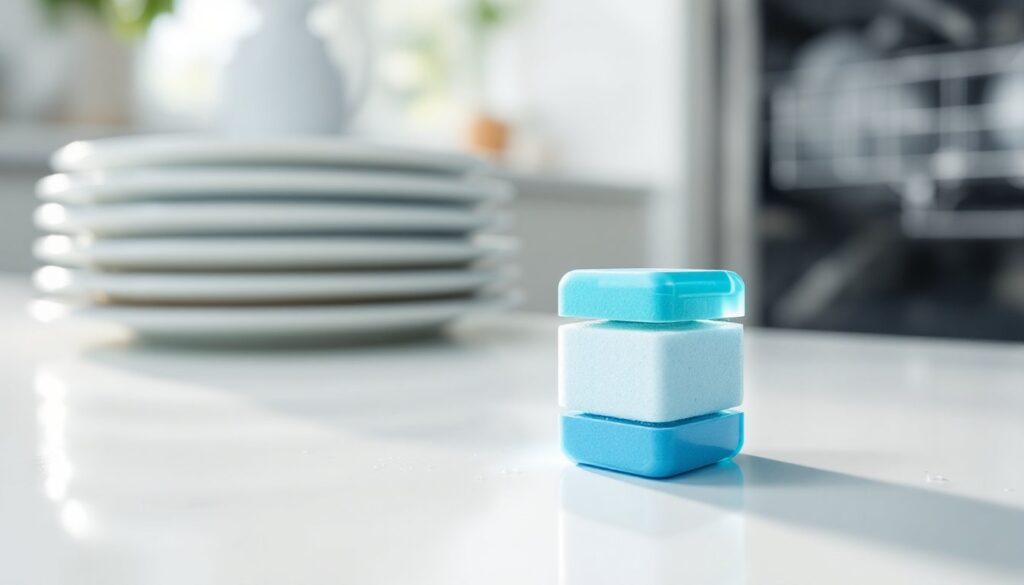
Dishwasher tabs are single-dose detergent packs designed to dissolve during a wash cycle, releasing cleaning agents, enzymes, and sometimes rinse aid or salt. Most tabs use a combination of alkaline salts to break down starches and proteins, surfactants to lift grease, and bleach or oxygen-based cleaners to tackle stains.
The outer wrapper, usually a polyvinyl alcohol (PVA) film, dissolves in water at temperatures as low as 120°F. That’s why they work even in shorter eco-cycles. Inside, you’ll find layered compartments: one releases immediately to break down food particles, while time-release layers activate later in the cycle for rinsing and shine.
Enzymes like protease and amylase target specific food residues. Protease breaks down protein (meat, eggs), while amylase handles starches (pasta, potatoes). Higher-end tabs add phosphates or citric acid to manage hard water minerals, which is crucial if your municipal supply exceeds 7 grains per gallon (gpg) hardness.
Understanding this chemistry helps when troubleshooting. If your glassware looks cloudy, it’s often not the tab, it’s water hardness, rinse aid settings, or water temperature. The tab can only do its job if the machine’s conditions support it.
Types of Dishwasher Tabs: Powder, Gel, and Multi-Action Tablets
Dishwasher detergents come in three main forms: powder, gel, and tablet (or tab). Each has trade-offs.
Powder is the most cost-effective and lets you adjust the dose based on load size or water hardness. It dissolves fast but can clump in humid climates or leave residue if the dispenser is damp. You’ll need to add separate rinse aid and possibly salt if you have hard water.
Gel dissolves at lower temps and won’t clump, making it a good fallback for older machines or quick-wash cycles. But it’s generally weaker on baked-on food and grease compared to powder or tabs. Like powder, it requires separate rinse aid.
Multi-action tablets combine detergent, rinse aid, and sometimes salt or glass-protection agents in a single pre-measured dose. Premium tabs from brands tested by Good Housekeeping often include stainless steel polish or degreasing boosters. They’re the most convenient but also the priciest per load. Some tabs have separate chambers that dissolve at different stages, look for terms like “dual-layer” or “tri-action.”
Single-chamber tabs are cheaper but release all ingredients at once, which can reduce rinse performance. Dual-chamber or wrapped tabs are better for hard water or heavy soil because they time the release of enzymes and rinse agents.
If you run partial loads or have very soft water, powder or gel gives you more control. For full loads and convenience, multi-action tabs are hard to beat.
How to Choose the Best Dishwasher Tabs for Your Home
Start by testing your water hardness. Most municipal water reports list it, or you can use inexpensive test strips (available at hardware stores). Hardness is measured in grains per gallon (gpg) or parts per million (ppm). Soft water is 0–3.5 gpg, moderate is 3.5–7 gpg, and hard water is 7+ gpg.
For soft water, basic single-chamber tabs or powder work fine. You don’t need extra rinse aid or salt, and overloading detergent can cause cloudy film. Use the minimum recommended dose.
For hard water (7+ gpg), choose tabs with built-in water softeners like citric acid or sodium citrate. Look for labels that say “hard water protection” or “anti-limescale.” You may still need to add rinse aid to the machine’s dispenser and check if your dishwasher has a salt compartment (common in European models). Filling it with dishwasher salt, not table salt, regenerates the built-in ion-exchange resin and prevents mineral buildup.
Hard Water vs. Soft Water Considerations
Hard water creates two problems: scale buildup inside the machine (on heating elements and spray arms) and cloudy residue on glassware. Tabs alone can’t solve this if your hardness is above 10 gpg. You’ll need to use rinse aid, set the dishwasher’s water hardness dial (if it has one), and clean the machine monthly with a descaling agent or white vinegar.
Soft water, on the other hand, can cause oversudsing if you use too much detergent. Excess suds interfere with rinsing and leave streaks. If you have a water softener installed, set your dishwasher to the lowest hardness setting and skip tabs with added salt.
Also consider load type. If you wash mostly lightly soiled items (plates, cups), standard tabs suffice. For pots, pans, and baked-on casserole dishes, look for tabs with heavy-duty enzymes or oxygen bleach. Avoid chlorine bleach tabs if you wash stainless steel or anodized aluminum regularly, they can cause discoloration over time.
Proper Usage Tips: Getting the Most from Your Dishwasher Tabs
Place the tab in the main detergent dispenser, not the pre-wash cup or loose in the bottom of the machine. The dispenser door opens mid-cycle, timing the release with the main wash phase. Tossing it in the bottom releases detergent too early, wasting it on the pre-rinse.
Remove the wrapper only if the tab isn’t water-soluble. Most modern tabs have PVA film that dissolves automatically. Unwrapping them defeats the time-release design and can cause a mess. Check the packaging, if it says “do not unwrap,” trust it.
Run hot water at the sink until it’s warm before starting the dishwasher. Many models don’t heat their own water from cold, so starting with tepid water means the tab dissolves poorly. Aim for inlet water around 120–140°F. Check your water heater setting if dishes come out dirty, most are factory-set to 120°F for safety, which is the bare minimum.
Don’t overload or block the dispenser door. Stacking plates or bowls in front of it prevents the tab from dropping and dissolving. Similarly, avoid nesting bowls or overlapping cookware, water spray needs to reach every surface.
Use rinse aid even if your tab claims to include it. The built-in rinse aid in tabs is minimal. Filling the machine’s rinse aid reservoir improves drying and shine, especially on glassware. Adjust the dispenser dial (usually 1–5) based on water hardness: higher settings for hard water.
Run a monthly cleaning cycle with a dishwasher cleaner or white vinegar to prevent buildup from hard water and detergent residue. This keeps spray arms and filters clear, which directly affects how well tabs dissolve and distribute.
Common Mistakes That Reduce Dishwasher Tab Effectiveness
Pre-rinsing dishes is the biggest unnecessary habit. Modern tabs and dishwashers are designed to handle food debris. Rinsing removes the soil that enzymes need to activate, and the machine’s sensors may shorten the cycle because it thinks the load is already clean. Scrape off large chunks, but leave the grease and sauce.
Using too many tabs or adding powder on top doesn’t make dishes cleaner, it leaves residue. Stick to one tab per load unless you’re running an extra-heavy soil cycle and the manual specifically recommends more.
Storing tabs in a damp place (like under the sink) causes them to clump or dissolve prematurely. Keep them in a sealed container in a cool, dry spot. Once the PVA film gets damp, it won’t release properly in the wash.
Ignoring the filter is a fast track to poor performance. Most dishwashers have a removable filter at the bottom that traps food particles. If it’s clogged, water can’t circulate, and the tab can’t dissolve or rinse effectively. Clean it weekly, just twist, lift, and rinse under the tap.
Using the wrong cycle for the load also undermines the tab. Light or eco cycles use less water and lower temps, which can prevent full dissolution. For greasy pots or heavily soiled loads, use the heavy or pots-and-pans cycle. Tested cleaning methods from The Spruce confirm that matching cycle to soil level is as important as detergent choice.
Hard water without rinse aid or salt guarantees cloudy film and spotting, no matter how premium the tab. Address the water chemistry first, then evaluate the detergent.
Eco-Friendly and Budget-Conscious Alternatives
Eco-friendly tabs use plant-based enzymes, biodegradable surfactants, and phosphate-free formulas. Brands certified by EPA Safer Choice or carrying USDA BioPreferred labels meet third-party standards for environmental impact. They cost more per tab but work as effectively as conventional options in soft to moderate water. In hard water, you may need to add rinse aid and salt separately.
For budget-conscious households, powder detergent offers the lowest cost per load, often under 10 cents compared to 25–40 cents for premium tabs. You’ll sacrifice convenience but gain dosing flexibility. Buy in bulk and store in an airtight container.
DIY dishwasher powder recipes (washing soda, borax, citric acid, and salt) appear in many Real Simple articles and online forums. They can work in soft water but often underperform on grease and protein. The cost savings are minimal once you factor in ingredient purchases, and homemade formulas lack the enzymes that make commercial tabs effective. If you go DIY, expect to pre-treat heavily soiled items.
Store brands and generic tabs are often manufactured by the same plants as name brands and use similar formulas. Compare active ingredients on the label, if you see the same enzymes and surfactants, you’re likely getting comparable performance at half the price.
Consider tab cutters or half-dosing if you run small or lightly soiled loads. Some users cut multi-chamber tabs in half (only if they’re not film-wrapped). This isn’t recommended by manufacturers and can cause uneven dissolving, but it’s an option if cost is tight and loads are consistently light.
Finally, reduce tab usage frequency by running the dishwasher only when full and scraping, not rinsing, dishes. A well-loaded, efficiently run machine uses one tab every day or two for a family of four, bringing annual costs to around $50–150 depending on brand.