If you’re still hand washing dishes because you think it saves water, you might be wasting more than you realize, both water and time. Modern dishwashers have come a long way from the water-guzzling machines of the past, and understanding how much water they actually use can help homeowners make smarter decisions about utility costs and appliance upgrades. The answer depends on the age of your unit, how you load it, and which cycle you choose. Let’s break down the numbers, compare them to hand washing, and explore what really drives water consumption in your kitchen.
Table of Contents
ToggleKey Takeaways
- Modern Energy Star–certified dishwashers use between 3 and 5 gallons per cycle, cutting water consumption by more than half compared to older models that used 10–15 gallons.
- Hand washing dishes consumes 8 to 27 gallons per session, making it significantly less efficient than a dishwasher—you could save around 6,000 gallons of water annually by switching to regular dishwasher use.
- Running full loads, using eco mode, and skipping pre-rinsing are the most effective ways to reduce dishwasher water usage, with potential savings of 200–400 gallons per year.
- Upgrading from a dishwasher older than 2010 to a modern Energy Star model can reduce water consumption by 30–50% and pay for itself within a few years through utility savings.
- Age and Energy Star certification are the biggest factors affecting dishwasher water consumption, as newer models feature soil sensors and spray optimization that adjust water volume based on load size and soil level.
Average Water Usage for Modern Dishwashers
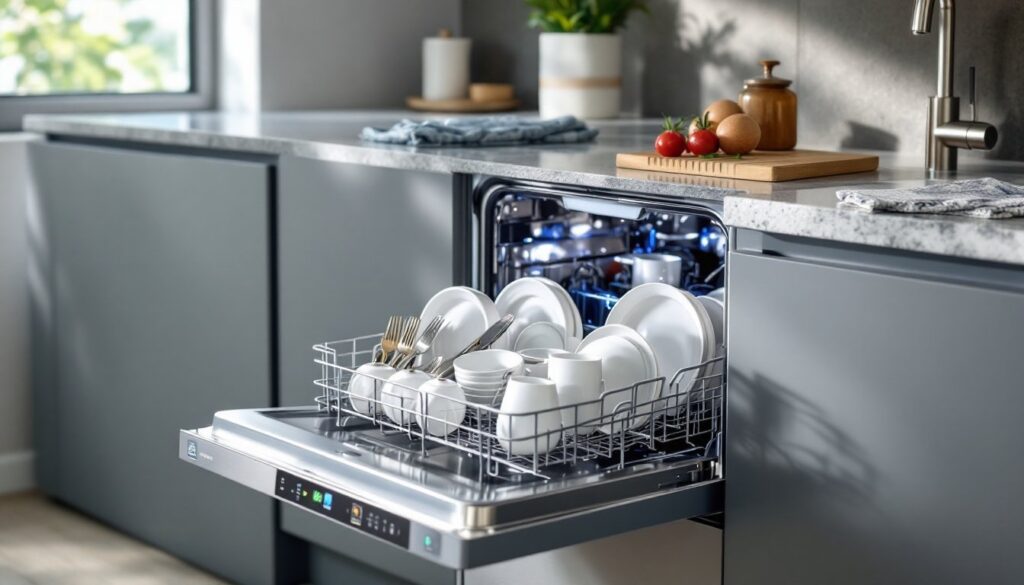
Today’s dishwashers are engineered for efficiency. A standard Energy Star–certified dishwasher uses between 3 and 5 gallons of water per cycle. Most fall right around the 4-gallon mark, which is a dramatic improvement over older models.
Dishwashers manufactured before 1994 could use as much as 10 to 15 gallons per load. Units from the early 2000s typically ranged from 6 to 10 gallons. The shift toward efficiency standards, driven by both federal regulations and Energy Star certifications, has cut water use by more than half in just two decades.
Compact or countertop dishwashers, which handle smaller loads, generally use 2 to 3.5 gallons per cycle. They’re a solid choice for apartments or smaller households, though you’ll run them more frequently to keep up with dish volume.
High-efficiency models from manufacturers like Bosch and Miele can dip below 3 gallons per cycle on eco modes, but those cycles take longer, sometimes up to three hours. The trade-off is time for water savings, which works if you’re running the machine overnight or during off-peak electricity hours.
Most dishwashers display their water usage in the product manual or on the Energy Guide label, expressed in gallons per cycle and estimated annual usage. Check that label before buying, it’s one of the few straightforward data points you’ll get on appliance efficiency.
How Dishwasher Water Usage Compares to Hand Washing
Hand washing dishes uses significantly more water than running a dishwasher, and the gap is wider than most people expect. Washing a full sink of dishes by hand typically consumes 8 to 27 gallons, depending on whether you leave the tap running or fill the sink and rinse in batches.
If you’re one of those people who rinses each dish under a steady stream before scrubbing, you’re likely hitting the high end of that range. A standard kitchen faucet flows at 2.2 gallons per minute (the current federal maximum). Leave it running for ten minutes, and you’ve already used 22 gallons, more than four dishwasher cycles.
Even disciplined hand washers who fill a basin and rinse carefully still use around 8 to 10 gallons per session. That’s double what a modern dishwasher requires for the same number of dishes. Research on dishwasher efficiency shows you could save around 6,000 gallons of water annually by switching from hand washing to using a dishwasher regularly.
The energy difference matters, too. Dishwashers heat water more efficiently than most tank water heaters, and they use internal heating elements to boost temperatures during the wash and sanitize cycles. Hand washing relies on your home’s water heater, which cycles on and off less efficiently.
Bottom line: unless you’re washing two plates and a fork, the dishwasher wins on both water and energy. It’s one of the few appliances where convenience and conservation actually align.
Factors That Affect Your Dishwasher’s Water Consumption
Not all dishwashers, or dishwasher loads, are created equal. Several variables influence how much water your machine uses, and understanding them can help you optimize performance and cost.
Age and Energy Star Certification
The single biggest factor is the age of your unit. Dishwashers manufactured in the last five years are subject to stricter Department of Energy standards, capping water use at 3.5 gallons per cycle for standard-size models and 3.1 gallons for compact units.
Energy Star certification goes a step further. To earn the label, a dishwasher must use no more than 3.2 gallons per cycle and meet minimum performance standards for cleaning and drying. These models also use at least 12% less energy than non-certified units.
If your dishwasher is more than ten years old, upgrading to an Energy Star model could cut your water use by 30% to 50%, depending on what you’re replacing. That translates to real savings, around 1,500 to 3,000 gallons per year for a household running the dishwasher five times a week.
Older models also lack the sensors and spray optimization found in newer machines, meaning they often use the same amount of water regardless of load size or soil level. Modern units adjust dynamically, which improves efficiency across the board.
Cycle Settings and Load Size
Most dishwashers offer multiple cycle options, normal, heavy, eco, quick, rinse-only, and each uses a different amount of water.
Normal cycles typically use the rated water amount (3 to 5 gallons). Heavy or pots-and-pans cycles may add an extra gallon or more because they include additional rinse phases and higher water pressure.
Eco or energy-saving modes reduce water and energy by extending cycle time and using lower temperatures. These cycles can drop water usage to 2.5 to 3 gallons, but they can take two to three hours. They’re ideal for lightly soiled loads or overnight runs.
Quick wash cycles are a mixed bag. They use less time but often the same or even slightly more water because they compensate for shorter wash periods with higher flow rates. Use them sparingly, they’re best for rinsing lightly used dishes, not baked-on casserole pans.
Load size matters less than you’d think on older machines, which run a fixed cycle regardless of how full they are. Newer models with soil sensors and load-detection tech adjust water volume based on what’s inside, but the difference is usually only a half-gallon or so. The real waste comes from running half-empty loads. Always run a full dishwasher to maximize water efficiency per dish.
How to Reduce Water Usage and Lower Your Utility Bills
If you want to squeeze every bit of efficiency out of your dishwasher, a few practical habits and upgrades make a measurable difference.
Skip the pre-rinse. Modern dishwashers and detergents are designed to handle food residue. Scrape off large chunks, but don’t rinse under the tap, you’re just duplicating what the machine will do. Pre-rinsing can add 10 to 20 gallons of wasted water per week.
Run full loads only. This is the simplest way to maximize water efficiency. A half-full dishwasher uses nearly the same amount of water as a full one, so you’re effectively doubling your water-per-dish cost. If you’re a small household, consider running the dishwasher every other day instead of daily.
Use the eco or energy-saver mode whenever possible. Yes, it takes longer, but if you’re not in a rush, the water and energy savings add up. Over a year, switching from normal to eco mode can save 200 to 400 gallons.
Upgrade to a modern, Energy Star–certified model. If your dishwasher is older than 2010, replacement pays for itself in water and energy savings within a few years, especially in areas with higher utility rates. Look for models with soil sensors, adjustable racks, and third-rack options, they let you fit more dishes per load and reduce the number of cycles you need to run.
Check and clean the spray arms and filter regularly. Clogged spray arms reduce cleaning performance, which can lead you to rewash dishes or run heavier cycles. Pull the lower spray arm once a month, clear any debris, and rinse the filter. It’s a two-minute task that maintains efficiency.
Install a hot water recirculation system or insulate your hot water lines. Dishwashers pull hot water from your home’s supply. If it takes a long time for hot water to reach the kitchen, the dishwasher may run longer or use more energy to heat cold water internally. This is more of a whole-house efficiency upgrade, but it can shave time and energy off every cycle.
Consider upgrading your kitchen faucet aerator. If you do wash any items by hand, a 1.5 gpm aerator (versus the standard 2.2 gpm) cuts water use by about 30% without a noticeable drop in pressure. It’s a $5 part that takes 30 seconds to screw on.
For those interested in tracking water use more broadly, smart home monitoring systems can provide real-time data on water consumption by appliance, helping identify waste and optimize usage patterns across the home.
One last note: if you’re renovating or upgrading multiple appliances, think about how they work together. Pairing an efficient dishwasher with a tankless or heat-pump water heater can amplify savings. For more ideas on optimizing your kitchen setup, appliance layout and efficiency tips can offer practical guidance.
Conclusion
Modern dishwashers are remarkably efficient, using as little as 3 gallons per cycle, far less than hand washing. Age, cycle settings, and how you load the machine all affect water consumption, but the biggest gains come from running full loads, skipping the pre-rinse, and choosing Energy Star models. If your dishwasher is more than a decade old, an upgrade will pay dividends in both water savings and utility costs.